
Embodied carbon has been nagging at the ‘net zero’ building ambition for a while but is often considered too complicated to consider in a useful way. The latest TM from...

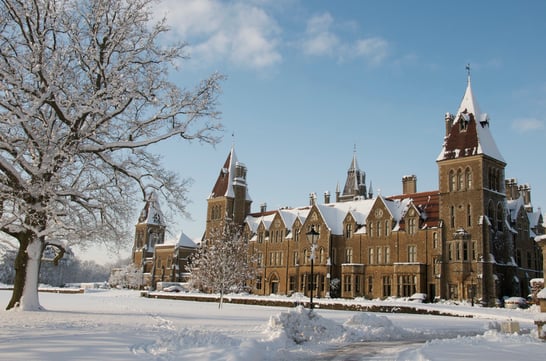
A boarding school with 400 pupils aged 13 to 18 years old.
The school has 34 buildings of various ages and sizes. The main block, containing the main hall, staffrooms and some classrooms, was built when the school was established in the 1890s and is now a listed building. Some of the original boarding houses remain although others were added throughout the 20th century, with the most recent built in 1995. The classroom blocks have a similar age range and are supplemented with portable buildings. The newest building is the sports hall, which was opened in 2007.
The 2021-2022 price fluctuations have made it a priority to cut energy costs.
The school’s energy consumption is complex. The newer buildings are heated by mains gas but there is no connection to the main block, which uses oil heating and contains a kitchen that uses liquid propane gas (LPG) for cooking. Every building is connected to mains electricity.
Every building is connected to mains electricity but while the facilities manager receives a monthly bill for the whole site, they do not know how much electricity is used by each building.
Atamate’s approach to non-domestic renovations [PDF] is based on the see-think-do framework:
With a multi-building site like a boarding school, Atamate’s first step would be extensive data collection using two device types:
In most cases, the data reveals efficiency measures that can be implemented quickly and with little capital cost such as:
At the same time as facilitating the site’s management, sensor data can be used to evaluate the impact of further renovation. For example, the bursar may wish to limit capital expenditures to a level that will be paid back through savings in operational expenditures over three years. Possible approaches might be:
The data-driven approach avoids wasting money on renovations that will not deliver significant energy savings and can be invaluable in assessing the limited renovation options available for a listed building.
Even if Atamate were originally approached with the primary goal of cutting energy costs, there are several ways in which atBOS could help the management and development of a boarding school once it is installed:
| Project description | Reducing energy costs in a boarding school |
| Atamate controlled systems | Heating Solar PV panels |
| Atamate data products | Indoor environment monitoring Metering |
| Mechanical systems | Thermostatic radiator valves |
Embodied carbon has been nagging at the ‘net zero’ building ambition for a while but is often considered too complicated to consider in a useful way. The latest TM from...
Whole house audio has become easy. The cornerstone of modern audio system is the DAC (digital analogue converter). The DAC will convert an audio stream from a computer...